





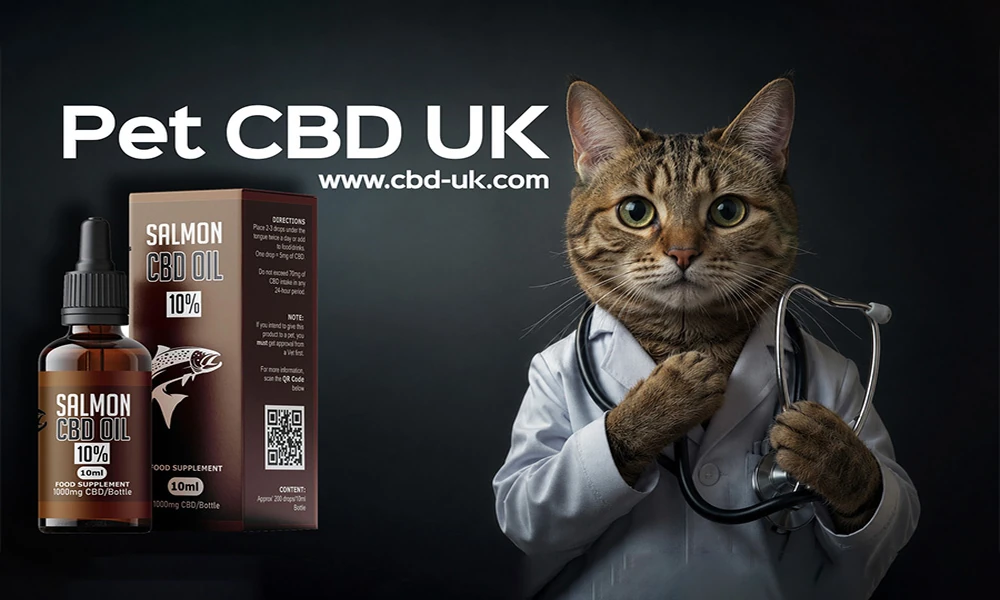
There are very few industries that have attracted as much confusion over the past decade as CBD. Depending on where you look, you’ll find articles describing it as everything from a miracle discovery to something that should be avoided altogether. Social media, forums, news articles and advertising have all contributed to a huge amount of information being shared, but unfortunately not all of it is accurate.
If you’ve been researching PET CBD UK, you’ve probably already noticed how difficult it can be to separate genuine information from opinion. One website may describe CBD one way, while another says something completely different. Add online discussions, personal experiences and marketing claims into the mix, and it’s easy to understand why many pet owners become uncertain about what to believe.
The good news is that most misconceptions can be cleared up simply by understanding the facts and recognising the difference between evidence, opinion and advertising. Responsible companies don’t benefit from confusing customers. In fact, the better informed someone becomes, the easier it is to identify businesses that genuinely value transparency over sales.
Whether you’ve only recently started researching CBD or have spent weeks comparing different products and websites, understanding some of the most common myths can make the whole subject much easier to navigate.
Myth 1: CBD And Cannabis Are Exactly The Same Thing
Perhaps the biggest misconception surrounding CBD is that it is simply another word for cannabis.
This misunderstanding has existed for years and continues to create unnecessary confusion.
CBD, or cannabidiol, is one of many naturally occurring compounds found within the hemp plant. Hemp itself belongs to the cannabis family, but not all cannabis plants are the same. Different varieties are cultivated for different purposes, and in the UK, industrial hemp is grown under strict regulations.
Because many people immediately associate the word cannabis with recreational drug use, they assume that all CBD products produce similar effects. This isn’t the case.
Understanding the difference between hemp-derived CBD and recreational cannabis is one of the first steps towards making informed decisions and avoiding many of the myths that continue circulating online.
Myth 2: Every CBD Product Is Identical
It’s easy to assume that all CBD products contain the same ingredients and differ only in branding or price.
In reality, there can be significant differences between manufacturers.
Hemp sourcing may differ.
Extraction methods vary.
Carrier oils are not always the same.
Manufacturing standards can vary considerably.
Laboratory testing procedures differ between companies.
Even products described using similar terminology may have been produced using completely different processes.
This is why comparing products properly involves much more than looking at the front label.
Responsible businesses understand this and usually provide detailed product information rather than expecting customers to rely solely on marketing slogans.
Myth 3: The Most Expensive Product Must Be The Best
Many industries encourage people to believe that a higher price automatically reflects better quality.
CBD doesn’t work like that.
Although higher production standards may increase manufacturing costs, price alone tells very little about a product.
Some companies invest heavily in branding.
Others spend more on advertising.
Some choose premium packaging.
Others focus investment on manufacturing and quality control.
Without understanding what you’re actually paying for, comparing prices in isolation rarely helps.
A more sensible approach is to compare transparency.
Does the manufacturer explain the ingredients?
Are laboratory reports available?
Is customer support knowledgeable?
Does the business explain where its hemp comes from?
These questions often reveal far more than price alone.
Myth 4: Every Website Provides Reliable Information
The internet contains an enormous amount of information about CBD.
Unfortunately, not all of it is accurate.
Some articles are written purely to attract search engine traffic.
Others repeat information copied from different websites.
Some are little more than sales pages disguised as educational content.
This makes choosing trustworthy sources increasingly important.
Look for businesses that clearly explain current UK guidance, distinguish between facts and opinions, avoid exaggerated claims and provide balanced educational material.
Reliable information should help readers understand the subject rather than simply encouraging them to make a purchase.
Myth 5: Marketing Claims Tell The Whole Story
Professional photography and impressive branding create excellent first impressions.
However, marketing should never replace evidence.
Words like premium, advanced, natural and superior appear on thousands of products across many different industries.
On their own, they reveal very little.
Instead of focusing on promotional language, look for practical information.
Does the company discuss manufacturing standards?
Can you find independent laboratory testing?
Are ingredients clearly listed?
Does the business explain its quality control procedures?
Responsible companies understand that informed customers appreciate detailed information far more than dramatic advertising.
Myth 6: Laboratory Testing Doesn’t Matter
Some buyers never look beyond the label.
Others assume laboratory reports are only relevant to scientists.
Neither approach is particularly helpful.
Independent testing has become one of the strongest indicators of transparency within the CBD industry.
Although testing isn’t the only factor worth considering, it demonstrates that manufacturers are willing to provide additional information about their products.
Businesses confident in their quality standards usually have little reason to hide this information.
Laboratory testing should be viewed alongside sourcing, manufacturing standards, customer support and overall transparency rather than in isolation.
Myth 7: Established Companies And New Companies Are The Same
Every successful business was new once.
However, experience does matter.
Companies that have operated for many years have often seen regulations change, manufacturing standards improve and customer expectations evolve.
They’ve answered thousands of customer questions and adapted as the industry has matured.
That experience frequently shows in the quality of information available on their websites.
Educational articles become more detailed.
Customer support becomes more knowledgeable.
Policies become clearer.
Established businesses have had time to build trust through consistent behaviour rather than relying solely on attractive marketing.
Myth 8: You Don’t Need To Read The Ingredients
Many buyers focus entirely on CBD content while paying little attention to the rest of the ingredients.
This is a mistake.
The full ingredient list provides valuable information about how the product has been formulated.
Responsible manufacturers present ingredients clearly.
They avoid unnecessary confusion.
They explain terminology where appropriate.
Taking just a few minutes to read ingredient information often provides a much clearer understanding of the product than looking only at the front label.
Myth 9: Customer Reviews Tell You Everything
Reviews can certainly be useful.
They often reveal how efficiently a company processes orders, how helpful customer support is and whether buyers are generally satisfied with the service they received.
However, reviews have limitations.
Individual experiences should never replace professional advice.
Nor should they be viewed as scientific evidence.
A sensible approach is to use reviews to judge the company rather than relying on them as proof of how a product may affect another animal.
Responsible businesses understand this distinction.
Myth 10: Responsible Companies Avoid Discussing UK Regulations
Some buyers worry that companies mentioning regulations are simply trying to discourage customers.
The opposite is usually true.
Responsible businesses recognise the importance of explaining current UK guidance.
They understand that CBD products for animals exist within a regulated environment and that veterinary advice remains important.
Ignoring these subjects entirely would be far less responsible.
Companies prepared to discuss regulations openly often demonstrate greater professionalism than those choosing not to mention them at all.
Why Misinformation Continues To Spread
The CBD industry has developed rapidly.
Whenever an industry grows quickly, misinformation tends to spread just as quickly.
Old articles remain online.
Social media posts continue being shared.
Personal opinions become repeated until they appear factual.
Marketing claims sometimes become confused with scientific evidence.
This makes careful research more valuable than ever.
Rather than relying on one website, compare multiple trusted sources.
Read educational material.
Take time to understand terminology.
Look for transparency rather than bold promises.
Knowledge remains the best defence against misinformation.
How To Judge Information More Effectively
One useful habit is to ask yourself a few simple questions whenever reading about CBD.
Who wrote this article?
Does it explain where the information comes from?
Is the language balanced?
Does it acknowledge uncertainty where appropriate?
Does it encourage responsible ownership?
Is the article educational, or is it simply trying to sell something?
The answers usually become obvious after only a few minutes.
Reliable information tends to educate first.
Marketing tends to persuade first.
Recognising that difference can dramatically improve the quality of your research.
Why Better Education Benefits Everyone
As customer knowledge increases, the entire industry benefits.
Businesses are encouraged to improve standards.
Manufacturers invest more heavily in transparency.
Educational resources become more detailed.
Customers ask better questions.
Poor quality information becomes easier to identify.
This gradual improvement has already transformed much of the UK CBD industry over recent years.
Today’s buyers are far more informed than they were a decade ago, and responsible companies have responded by providing clearer, more comprehensive information than ever before.
Separating Facts From Fiction
The internet will probably never be completely free of myths surrounding CBD.
New misconceptions will appear while older ones continue circulating for years.
The important thing isn’t memorising every claim you encounter.
It’s learning how to evaluate information sensibly.
Read beyond the headline.
Compare multiple trusted sources.
Look for transparency.
Understand current UK guidance.
Choose companies that educate rather than simply advertise.
By approaching CBD with curiosity instead of assumptions, pet owners place themselves in a much stronger position to understand the subject properly and make informed decisions based on reliable information rather than common myths.