

A dog with diarrhoea that comes and goes, stools that are sometimes fine and sometimes greasy and foul-smelling, a slightly dull coat and a belly that never seems quite settled is often labelled as having a sensitive stomach. Owners change foods, cut out treats, and puzzle over what is upsetting their pet. Quite frequently the answer is not in the food bowl at all but in the gut itself, in the form of parasites that have taken up residence and are quietly disrupting digestion.
Intestinal parasites remain common in dogs across the UK, from urban parks to farmland, and they are one of the first things a vet will want to rule out when a dog has recurring digestive trouble. Some are visible to the naked eye; most are not. This article covers the parasites UK dog owners are most likely to encounter, how they affect the gut, the signs to watch for, how they are diagnosed and controlled, and how to support a gut that has been through a parasite problem. It also explains where Dog Probiotics fit in a recovery routine, and what those products can and cannot legitimately do.
Roundworms
Toxocara canis is the most widespread worm in UK dogs. Puppies are almost always infected, either before birth across the placenta or through their mother’s milk, which is why worming begins at two weeks of age. Adult dogs pick up infection from eggs in soil and faeces, and from eating infected rodents. Roundworms live in the small intestine, where in large numbers they cause a pot-bellied appearance in puppies, poor growth, vomiting, diarrhoea, and occasionally visible spaghetti-like worms in stools or vomit. Roundworm eggs can also infect people, particularly children, which is a public health reason for regular treatment and picking up faeces promptly.
Tapeworms
Dogs acquire tapeworms by swallowing fleas carrying tapeworm larvae, or by eating raw offal, carcasses or prey. Segments resembling grains of rice may be seen around the dog’s rear end or in fresh faeces. Tapeworms cause less digestive upset than other parasites but can contribute to an unsettled gut, itching around the anus and scooting. Flea control is an essential part of tapeworm prevention. Dogs travelling abroad, or living in some rural areas, may also be exposed to tapeworm species of greater concern to human health, and your vet will advise on specific treatment before and after travel.
Whipworms and Hookworms
Whipworms live in the large intestine and are a recognised cause of chronic, intermittent, sometimes bloody diarrhoea with mucus and straining. Their eggs are extremely hardy in the environment and can survive for years in soil, so dogs that use the same garden or exercise area are repeatedly re-exposed. Hookworms are less common in the UK but are found, particularly in kennels, greyhounds and dogs with access to contaminated ground. They attach to the gut lining and feed on blood, causing diarrhoea, weight loss and anaemia. Not all routine worming products cover whipworm and hookworm, so it is worth checking with your vet what your dog’s treatment actually includes.
Giardia
Giardia is not a worm but a single-celled protozoan parasite, and it is one of the most common causes of recurring diarrhoea in UK dogs, especially puppies, dogs from breeding establishments or rescue centres, and dogs that drink from puddles, streams and shared water bowls. It coats the surface of the small intestine, interfering with absorption of nutrients and producing intermittent, pale, greasy, foul-smelling diarrhoea, often with mucus, along with weight loss and a poor coat. Some dogs carry it with no signs at all and shed it to others.
Giardia is diagnosed by faecal testing, and because it is shed intermittently, vets usually ask for samples collected over three days. Treatment is with prescription medication, and re-infection is common because the cysts survive in the environment and on the dog’s coat. Bathing the dog at the end of treatment, cleaning bedding and bowls, picking up faeces immediately and discouraging drinking from standing water all reduce the chance of it coming back. Giardia can, in some circumstances, affect people, so good hand hygiene matters.
Coccidia and Other Protozoa
Coccidia are another group of microscopic parasites, most significant in puppies, in which they cause watery, sometimes bloody diarrhoea, particularly under stress such as rehoming. They are diagnosed by faecal examination and treated with specific medication. Other protozoal and bacterial organisms occasionally cause similar signs, which is a further reason why laboratory testing of faeces, rather than guesswork, is the right response to persistent diarrhoea.
How Parasites Disrupt Digestion
Whatever the species, parasites damage the gut in several ways. They irritate and inflame the intestinal lining, they compete with the dog for nutrients, some cause bleeding, and all of them disturb the balance of the gut microbiome, the community of bacteria that ferments fibre, nourishes the gut wall and supports normal immune function. A dog recovering from a parasite infestation often has a gut that remains unsettled for weeks after the parasites themselves are gone, with variable stools, wind and reduced resilience to diet changes and stress. Add in the effects of the treatment, which in some cases involves medication that itself upsets the gut, and it is easy to see why recovery is not always instant.
Diagnosis and Control
The cornerstone is regular preventive worming, using a product and schedule recommended by your vet according to your dog’s age, lifestyle and risk. Puppies need frequent treatment in their early months; adult dogs are commonly treated every one to three months depending on exposure, with dogs that scavenge, hunt, eat raw food or have young children in the household at the higher end. Flea control is part of tapeworm prevention. Faecal testing, either as a routine screen or whenever diarrhoea is recurrent, identifies parasites that routine worming does not cover, including Giardia and coccidia, and confirms whether treatment has worked.
Environmental hygiene matters as much as medication. Pick up faeces promptly at home and on walks, wash bowls and bedding regularly, discourage drinking from puddles and ponds, keep the garden clear, and be aware that certain areas, such as heavily used parks and farmland, carry higher risks.
Supporting the Gut During and After Treatment
Once a parasite has been identified and treated, the aim is to help the gut recover. Keep the diet consistent and simple, avoid rich treats and scraps, feed smaller regular meals, and ensure plenty of fresh water. Follow the vet’s instructions for repeat treatment and follow-up faecal testing exactly, because incomplete courses and untested recovery are the usual reasons parasites return.
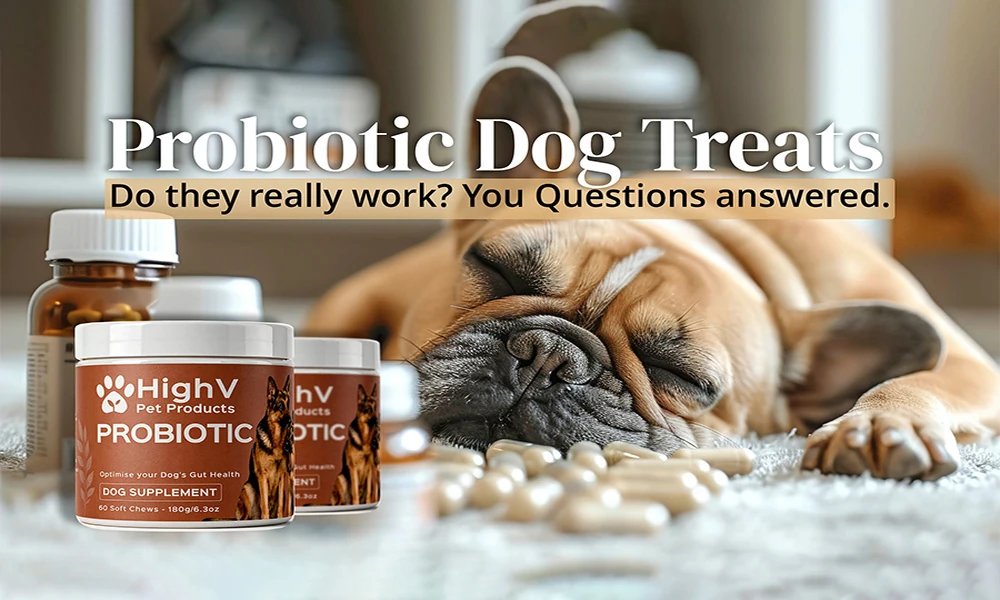
Many owners include a probiotic in the routine during and after parasite treatment. In the UK, probiotics fed to dogs are regulated as feed additives in the gut flora stabiliser category, and only authorised strains, most commonly a specific strain of Enterococcus faecium, may be used. Products containing them, whether treats, chews, powders or pastes, are complementary pet foods designed to be fed alongside the normal diet. Because parasites and their treatment both disturb the gut microbiome, feeding an authorised probiotic daily through recovery is a sensible supportive measure, and a palatable format such as a chew or treat makes consistency easy in a dog that may be off its food.
It is essential to understand the limits. A probiotic product is not a veterinary medicine and holds no marketing authorisation from the Veterinary Medicines Directorate. It does not kill worms, does not treat Giardia and does not prevent infection, and it cannot lawfully claim to treat, cure or prevent any condition. Only prescription and authorised antiparasitic medicines, obtained through your vet or a qualified supplier, do that. A responsibly labelled probiotic product will describe itself as supporting normal digestive function or helping to maintain a balanced gut flora, and that is exactly the role it plays in recovery: everyday support for the gut environment, never a substitute for diagnosis and treatment.
Choose a product that names its strain, guarantees the live count to the end of shelf life, has a simple recipe with no added sugar, provides a feeding guide by weight and gives storage instructions. Give it at a different time of day from any medication unless your vet says otherwise. Introduce it gradually and feed it consistently for several weeks after treatment while the gut settles.
When to See the Vet
Any dog with diarrhoea lasting more than 24 to 48 hours, blood in stools, visible worms, weight loss, a pot belly, vomiting, lethargy, refusal of water or a dull coat should be examined, and persistent or recurring diarrhoea should always be investigated with faecal testing rather than treated with repeated diet changes. Puppies with diarrhoea need prompt attention because they dehydrate quickly and because parvovirus must be excluded. If your dog has been treated for parasites and signs persist after the course, go back to the practice; re-infection, resistance or a second problem may be involved.
Summary
Roundworms, tapeworms, whipworms, hookworms, Giardia and coccidia are common in UK dogs and are a frequent, often overlooked cause of recurring digestive upset. They inflame the gut, compete for nutrients and disturb the microbiome, and the effects can persist after treatment. Regular preventive worming tailored to the dog’s risk, flea control, faecal testing whenever diarrhoea recurs and good environmental hygiene are the foundations of control. Prescription and authorised antiparasitic medicines from your vet do the treating; a consistent simple diet and an authorised probiotic fed daily support the gut through recovery, provided owners remember that probiotic products are complementary pet foods that support normal digestive function, not medicines that kill parasites or treat disease. If your dog’s stomach never quite settles, ask your vet to check for parasites before you blame the food.